

April 2026
Issue 100
Get Ready to Fish: New Regs, Family Events & More
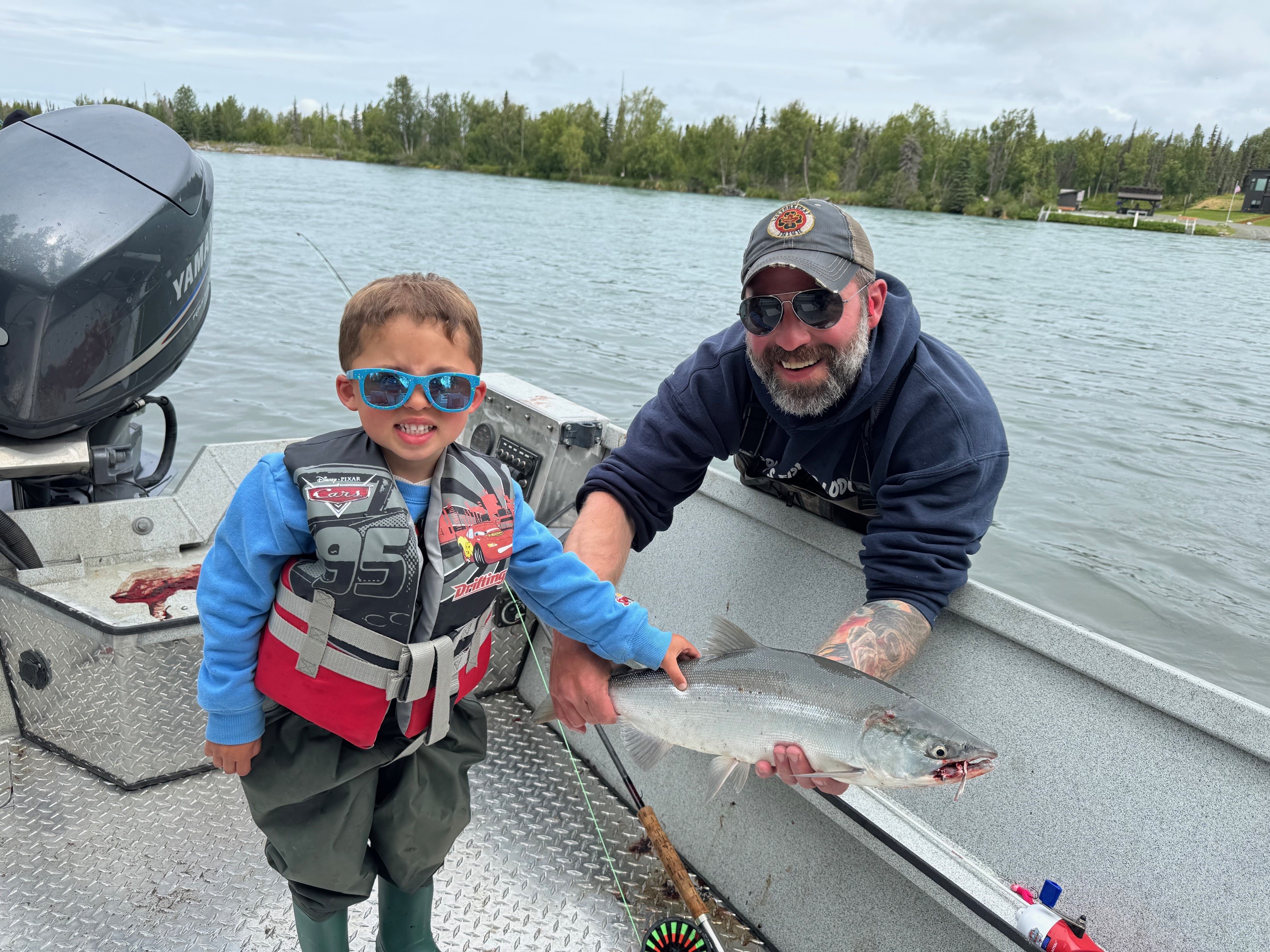
Summer is right around the corner, and it's time to start planning your next Alaska fishing adventure. The 2026 Sport Fish Regulation Summary books are now available, making it easy to check the rules before you head out. Whether you're exploring a favorite local spot or trying somewhere new, taking a few minutes to review the regulations helps ensure a safe, successful, and responsible trip.
This season also brings plenty of opportunities to get outside and connect with Alaska's fisheries. From family-friendly fishing events across Southeast Alaska, to razor clamming adventures on the west side of Cook Inlet, there are countless ways to make the most of Alaska's waters.
Don't forget to purchase your 2026 sport fishing license and king salmon stamp. Visit our online store. Or download the ADF&G mobile app and you can store your licenses, tags and permits in your mobile device.
If you have a comment or story ideas for "Reel Times", we encourage you to send them our way. You can send comments to ryan.ragan@alaska.gov.
See you on the water.
2026 Sport Fish Regulation Summary Books Now Available
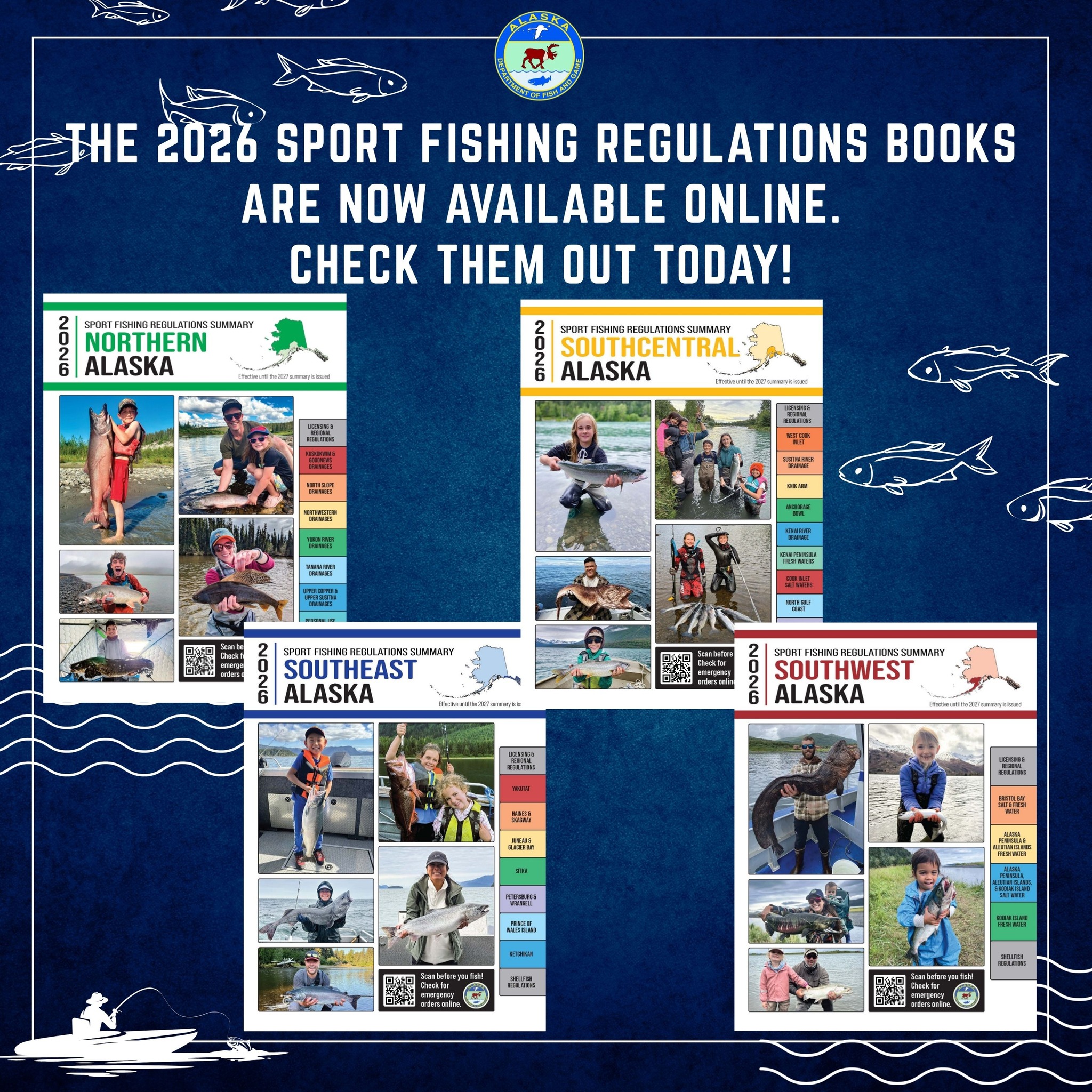
The 2026 Sport Fish Regulation Summary Books are now available online, at ADF&G offices, and at vendors across the state.
There are four separate books that outline sport fishing regulations by region:
Be sure to check the regulations for the area you plan to fish before going fishing. If you have questions, please contact an ADF&G office. You'll find contact information here.
Reel in the Fun - Family Fishing Days in Southeast Alaska
By Jess Etheridge (Juneau Assistant Area Management Biologist)
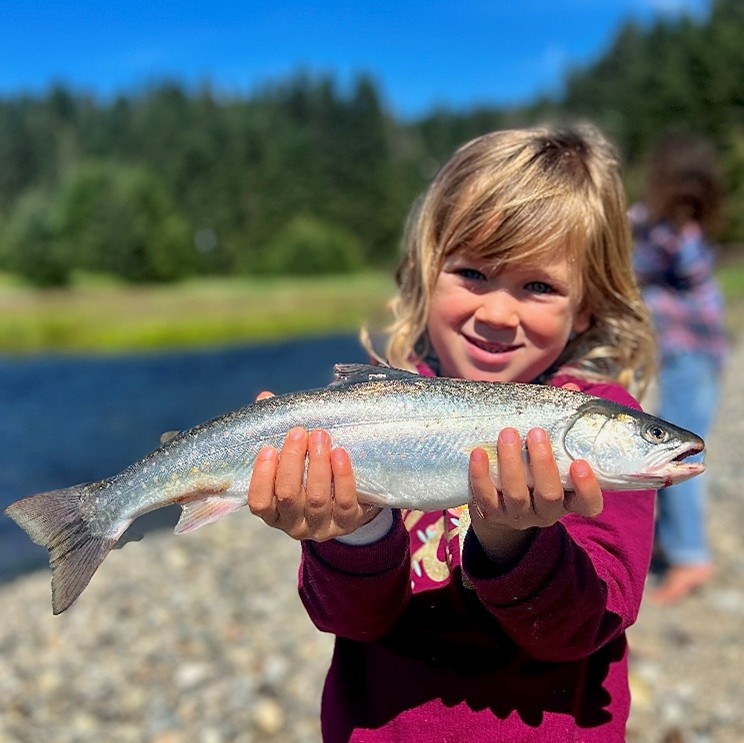
Hooked lines, happy kids, and plenty of fish stories in the making, Family Fishing Days are back across Southeast Alaska! Each year, these events bring kids and families together for a day of outdoor fun, hands-on learning, and a chance to experience the thrill of fishing in some of the most beautiful places in the state. It's an opportunity to unplug, get outside, and create memories that stick long after the day is over.
Designed to be welcoming for all experience levels, these free events make it easy to jump right in. Many locations provide rods, tackle, and on-site guidance. Whether it's a child's very first cast or a returning young angler, everyone can take part. From stocked ponds filled with rainbow trout to saltwater shorelines with salmon opportunities, each community offers its own unique fishing experience, along with games, activities, and plenty of smiles.
Beyond the fishing activity, these events give kids a chance to learn about fish, habitat, and the importance of taking care of Alaska's fisheries. Whether it's identifying different species, learning how fish use freshwater and marine environments, or understanding simple conservation practices, kids get a hands-on introduction to how these systems work. With guidance from biologists, and partner organizations partners, these lessons come to life in a way that's engaging, memorable, and grounded in real, hands-on experiences.
More than just a day of fishing, Family Fishing Days continue to bring communities together, celebrate Alaska's fishing traditions, and inspire the next generation of anglers, one cast at a time.
Community Fishing Day Highlights
By Jess Etheridge (Juneau Assistant Area Management Biologist)
Haines - Winter (January)
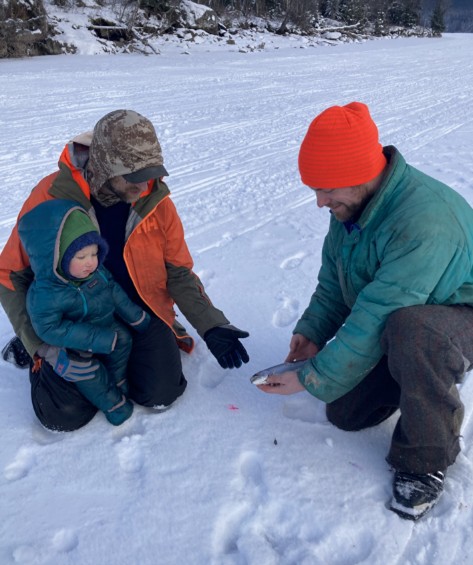
Families in Haines and Klukwan bundle up for a winter adventure at Mosquito Lake each January. Hosted by the Alaska Department of Fish and Game (ADF&G), Takshanuk Watershed Council, Chilkoot Indian Association, and Alaska State Parks, kids learn to ice fish for rainbow trout, cutthroat, and Dolly Varden. Between jigging sessions, young anglers warm up by the fire, roast marshmallows, and learn about local watersheds. It's a great way to enjoy the outdoors, even in winter!
Petersburg - Mid May
The Lil' Fisk Derby, part of the Little Norway Festival, is a local favorite that draws more than 120 kids. ADF&G collaborates with the Sons of Norway and the Petersburg Chamber of Commerce to host this fun event. Young anglers compete for quirky and classic awards, from biggest fish to the most unusual fish. It's all about fun, learning, and community.
Sitka - Early June
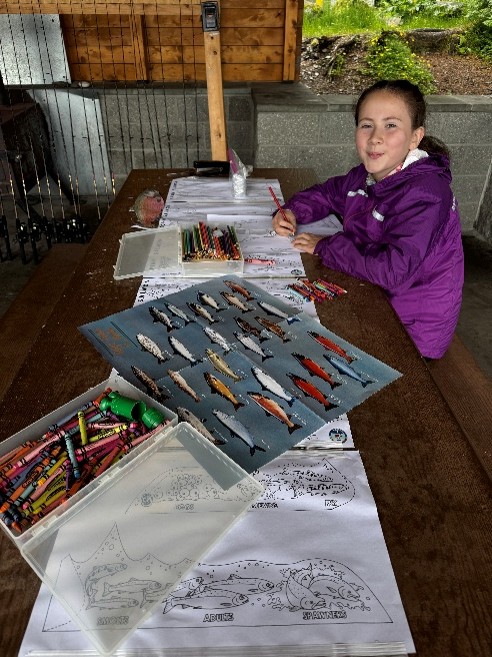
At the Swan Lake Junior Trout Derby, the excitement starts with a United States Coast Guard (USCG) helicopter delivery of wild rainbow trout from Sukoi Lake. This 83-year tradition draws 150–200 participants and features prizes, fishing from shore or boat, and one-day-only bait use. The event is organized by the United States Forest Service (USFS), ADF&G, and Rotary Club.
Ketchikan - Mid June
City Park Ponds comes alive with excitement as the USFS and ADF&G host a fun-filled day for young anglers. The ponds are stocked with rainbow trout (raised at Deer Mountain Hatchery operated by Southern Southeast Regional Aquaculture Association, SSRAA) just in time for the event, and kids can enjoy hands-on activities like casting games, fish printing, and lure-making. This welcoming event is perfect for first-time fishers and families alike.
Wrangell - Mid to Late June
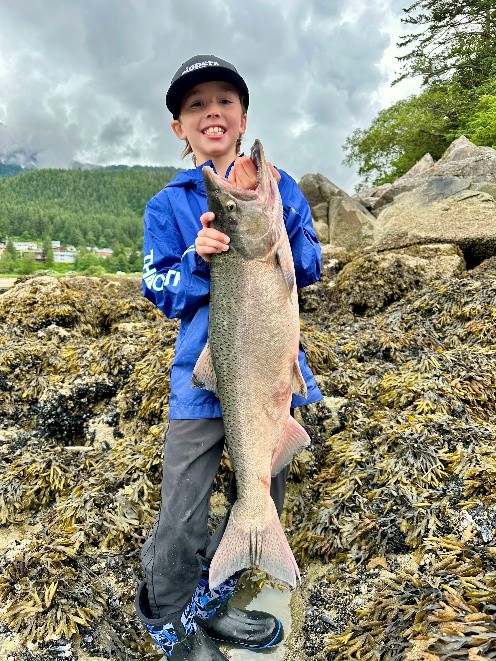
Pat's Lake hosts this fun event, brought to you by the USFS Wrangell District, Wrangell Cooperative Association Earth Branch, ADF&G, and the Wrangell Boys and Girl Scouts. The day includes fishing, lunch, games, and crafts. Special weekend fishing regulations allow kids under 16 to use bait and keep up to two cutthroat trout with no size limit. Fishing gear and PFDs may be available onsite.
Juneau - Late June to Early July
Lena Cove hosts this family-friendly event, organized by ADF&G, USFS, DIPAC and Trout Unlimited. Kids can borrow rods, learn to cast, identify fish, and enjoy fun activities like coloring and tide pooling. It's a great way to get outdoors and discover fishing in Juneau.
Kake - Early August
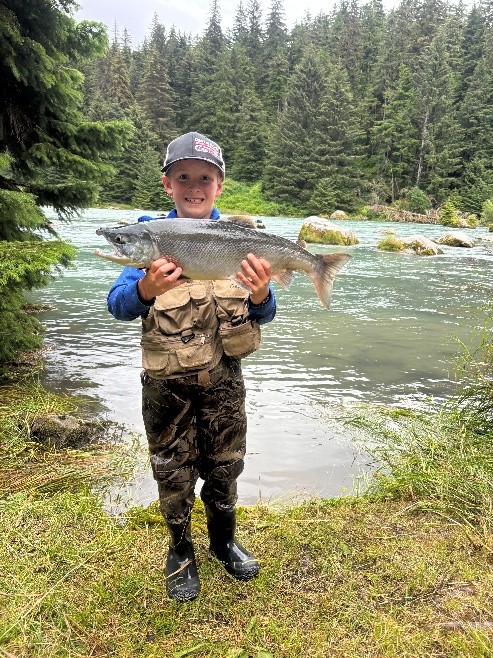
The Kake Kids Fishing Derby is a community collaboration between USFS, the Organized Village of Kake (OVK), Kake Tribal Corporation, ADF&G, and Northern Southeast Regional Aquaculture Association (NSRAA). Local businesses and residents donate prizes like bikes, fishing rods, and gift cards. Kids enjoy fishing, crafting lures, nature-print shirts, insect ID, and a free barbecue lunch.
Prince of Wales - Early August
Hosted by USFS and ADF&G at Gravelly Creek Recreation Site on the Thorne River, this Kids Fishing Day features a derby for pink and coho salmon and Dolly Varden. Kids compete for prizes in various age groups, and fish can be measured and released. The event also offers fun booths with activities like fish printing, lure making, and casting games. A rod loaner program is also available, allowing kids to borrow fishing gear during the event.
Mark Your Calendars!
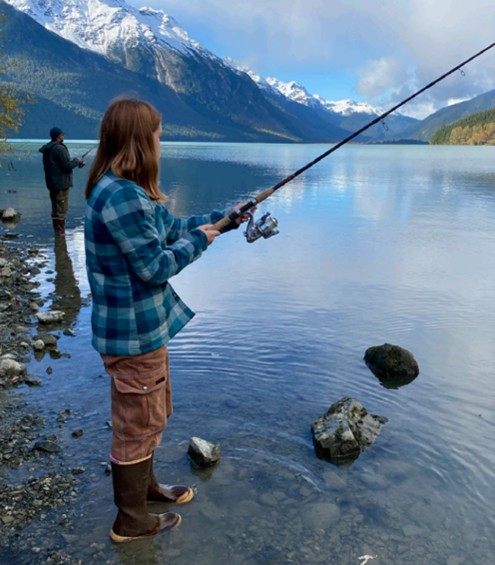
Event dates and details may change slightly each year, so check local postings or contact your nearest ADF&G office for updates. Whether it's a first cast, a first catch, or simply time spent together outdoors, Family Fishing Days are a chance to slow down, connect, and enjoy Alaska's fishing traditions.
Digging razor clams in West Cook Inlet
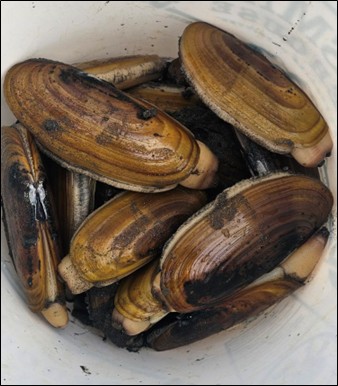
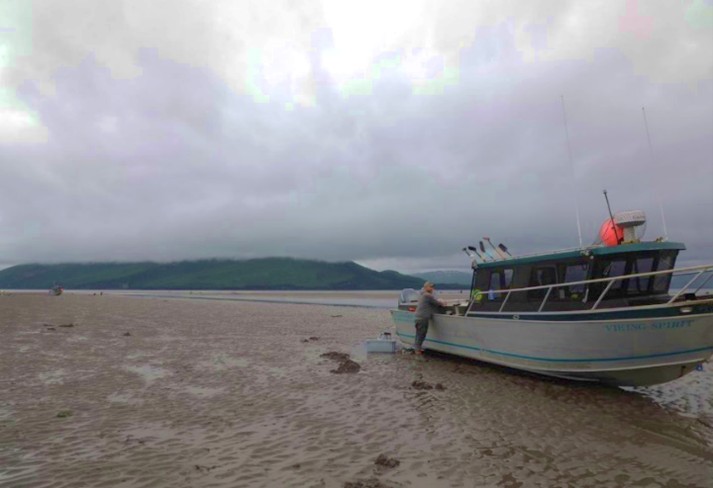
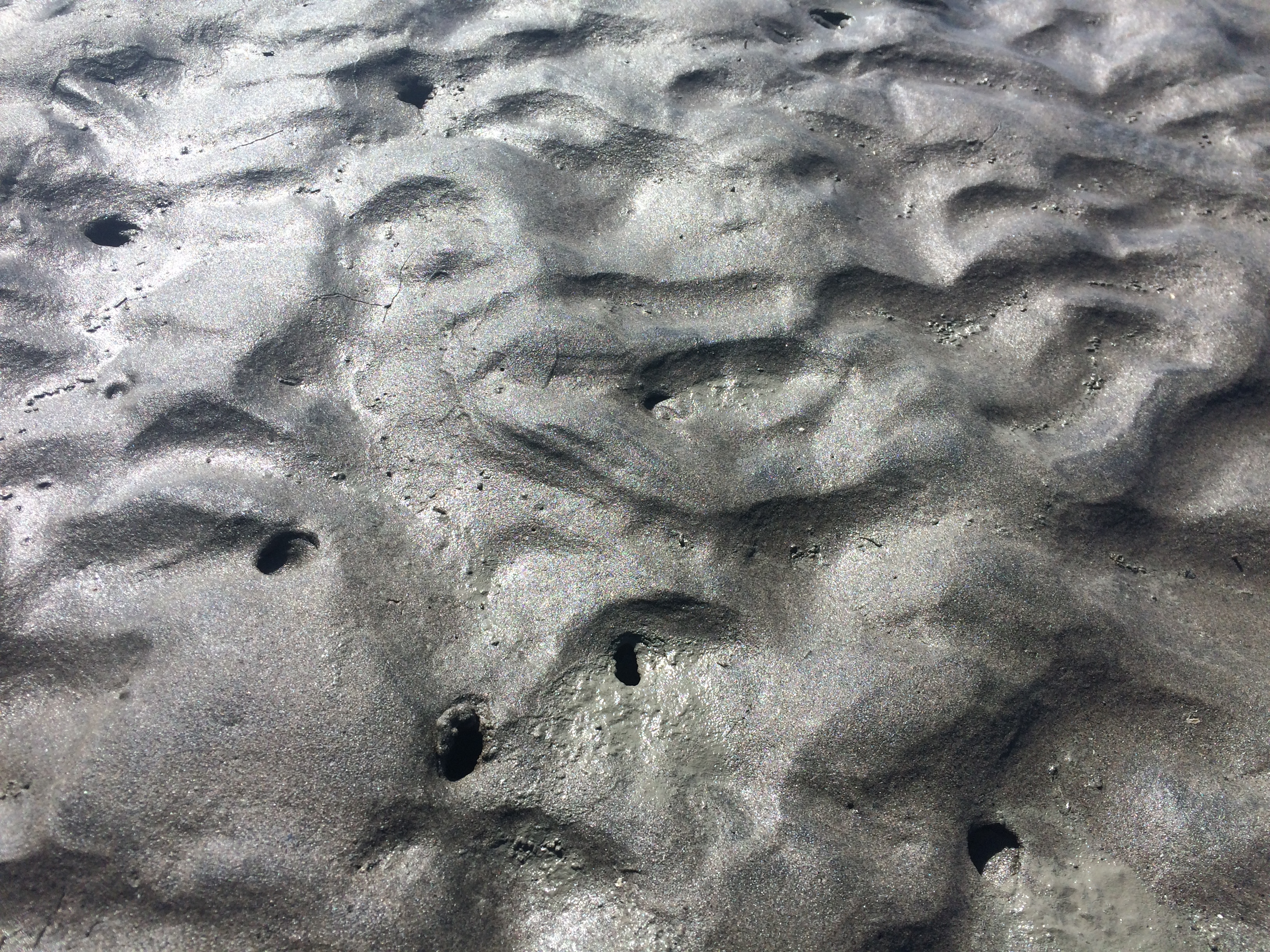
Looking for a new adventure? Have you missed having razor clams since the closure along the Kenai Peninsula? Consider a trip to the sandy beaches of west Cook Inlet later this summer! The isolated sandy beaches from Polly Creek to Chinitna Bay support large numbers of big razor clams that are available for harvest during minus tides throughout the summer. These beaches require access by sufficiently large saltwater boat or by small, wheeled planes capable of beach landings. If you don't own any of those toys, don't worry there's charters available in the Ninilchik area to get you there and back.
Although getting there can be challenging, the remaining details are mostly straightforward. For the best clamming, it's best to go across the Inlet on the more extreme minus tides (-2.5' or smaller). July is when the clams are in peak condition for food quality. So this year, the week of July 12th is ideal. The best beaches currently are Polly Creek and Crescent River Bar. Plan on arriving 1-2 hours before low tide. If you're boating across, plan accordingly with the marine weather; it takes more time to get there with more sea state.
Starting this season, a household permit is required to participate in the fishery and reporting is required by the end of the year. To get a free permit go to the ADF&G store or get it through the mobile app. This permit is similar to other permits that ADF&G issues like the Upper Cook Inlet Personal Use salmon permit. The data from this permit will provide more timely and accurate effort and harvest information
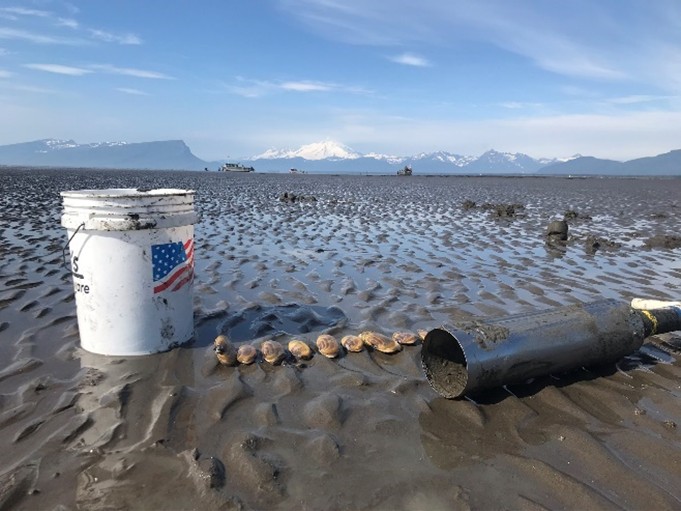
The sport fishing regulations are simple and the gear needed is minimal. The bag and possession limit is 10 gallons, which can be easily measured with two 5-gallon buckets. Diggers are required to retain all razor clams regardless of size because almost all clams with broken shells will die. Gear is limited to shovels, hands, or manually operated clam guns. We prefer to dig clams in chest waders to stay clean, but knee boots and rain gear work all the same.
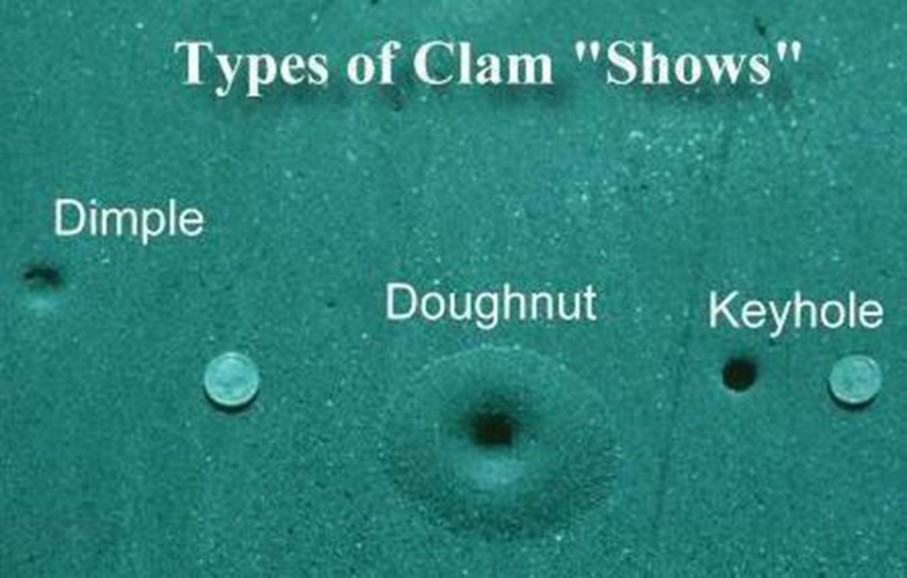
The fun part of digging razor clams is walking around looking for "shows", which are indentations, holes, divots, or doughnuts in the sand. When using a shovel, dig away a scoop or two of sand beside (not directly on top of) the show and reach into the sand on the side of the hole to recover the clam. Be careful not to dig too close to the show or the clam will be damaged. Clams with broken shells are slightly harder to clean, but their table quality is not affected. Clam guns are 4 to 6" diameter pipes or tubes with a handle and a small air vent at the closed upper end. Clams are dug by pushing the tube down over the clam show with a rocking motion. The air vent is then blocked with a finger or thumb and the core of sand, hopefully containing the clam, is pulled up and dropped on the beach. Clam guns are faster than using shovels but tend to break more clams than a shovel in an experienced digger's hands.
Kind of like shooting a moose, the real work begins when you are done digging and start cleaning your clams. There are lots of resources out there to show you the options to make the process go smoothly. One of the more important steps is to make sure the clams are well rinsed before you leave the beach and to travel with them in the bucket filled with seawater. This will help remove as much of the sand as possible ahead of time.
The two options for removing the meat from the shells are using a hot water bath to relax the hinge muscles to aid in separating the meat from the shell, or shucking them with a small knife. Then we prefer to use scissors to slice open the foot to remove the guts and cut away the gills and tip of the siphon. The possibilities for preparation are nearly endless, but classic battered and deep fried fresh clams are hard to beat. Razor clams do freeze well, so think about chowders or a seafood gumbo for the cold months and fritters for when you need an appetizer that you are sure no one else will be bringing to the potluck.
Your Online Resource to Help ID Rockfish
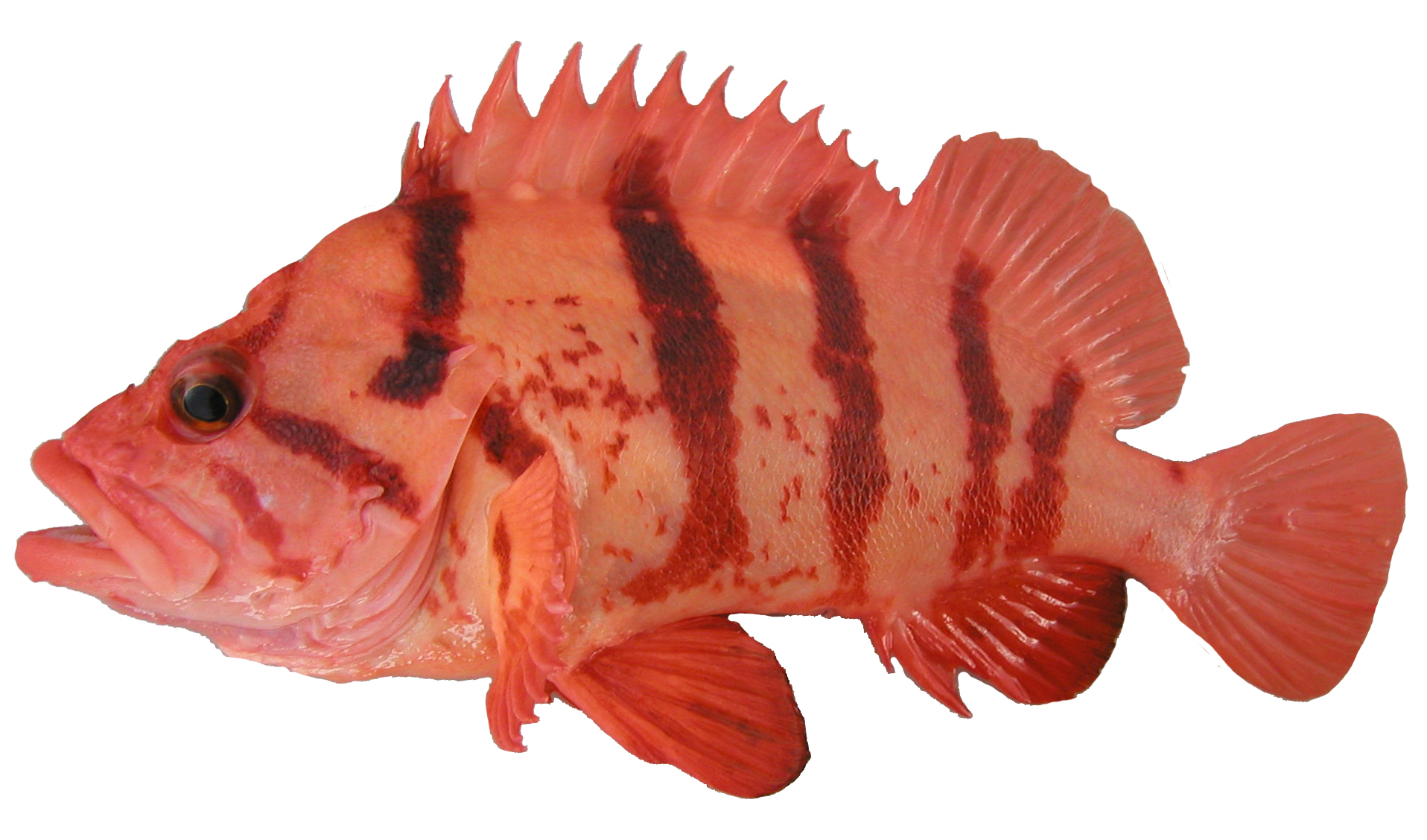
With several different species of rockfish found in Alaska, identifying each species can be challenging. We've added a rockfish identification section to our website to help you in your rockfish ID efforts.
You'll find pictures and descriptions of rockfish species here.
Vibrant Citrus & Fennel Alaska Smoked Salmon Salad
Enjoy your next meal with this recipe for a : Vibrant Citrus & Fennel Alaska Smoked Salmon Salad from the Alaska Seafood Marketing Institute.
Enjoy!
If you have any questions about the Reel Times newsletter, please contact Ryan Ragan at ryan.ragan@alaska.gov